You're at a point where you know something has to change, you feel it, you think about it, you wake up with it and go to sleep with it, but you don't know exactly what to move, or when, or how.
And the worst part isn't the confusion but that you keep functioning, you go to work, you deliver, you produce, you smile when you're supposed to, but inside there's a conversation that won't stop: do I stay or do I go? Is this the right moment? What if I'm wrong? What if it's worse?
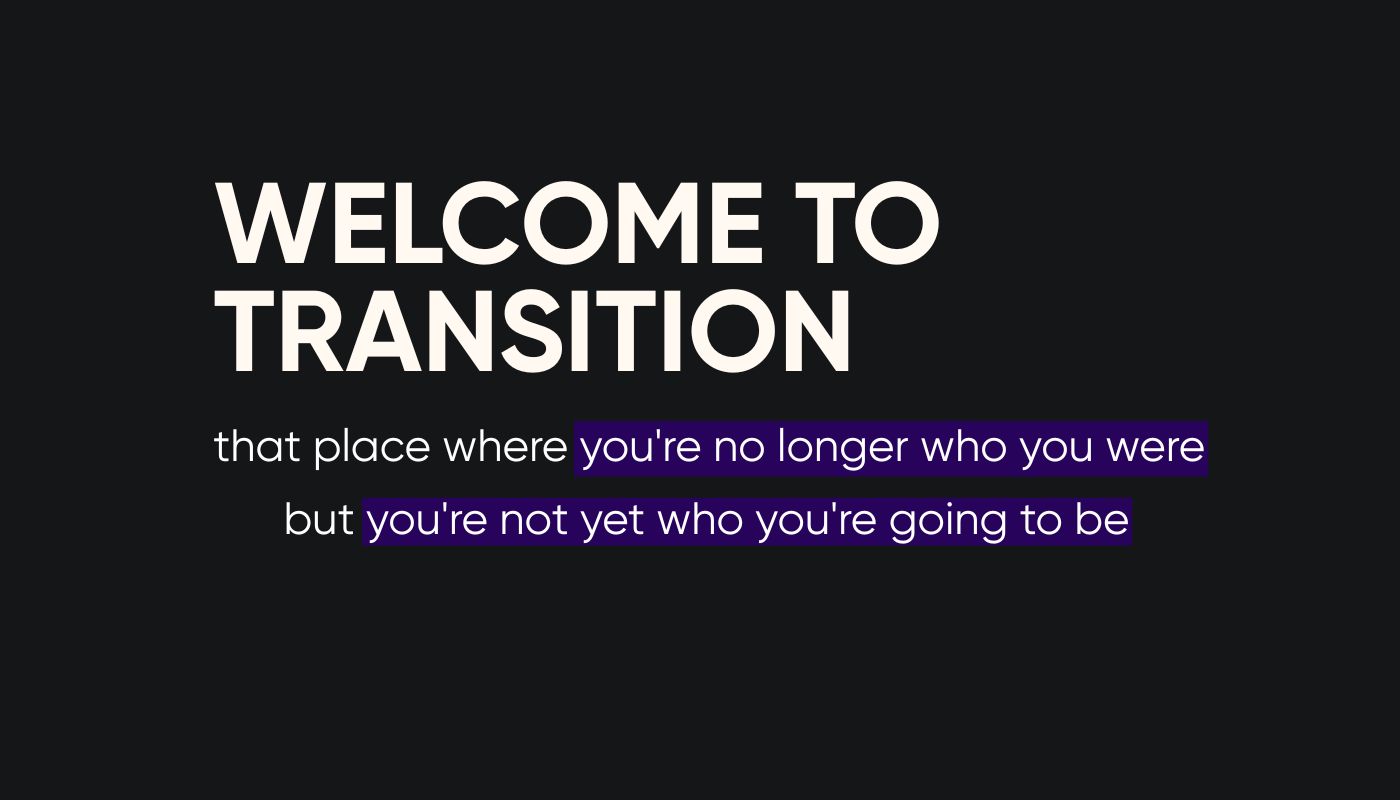
Welcome to transition, that place where you're no longer who you were but you're not yet who you're going to be, where every decision feels like it carries the weight of your entire life.
That's what I want to talk about today, how to make strategic decisions when everything is in motion, no magic formulas, no self-help phrases, just structure, honesty, and the depth this topic deserves.
You're about to make an important decision and you're anxious, and you want to resolve it now just to stop feeling what you're feeling, and that's exactly where most people go wrong.
When you decide just to make something stop hurting you're not deciding from a clear place but reacting from discomfort, and the decisions you make from there almost never hold over time, they're the ones that have you asking three months later why you did that.
So the first step isn't to decide but to lower the anxiety before you touch that decision, and it starts with a question that sounds simple but that very few people ask themselves seriously: what do I actually need? Not what do I want to escape, not what am I afraid of losing, but what do I need, what values do I want to honor in this new chapter, what emotions are present right now and which of those emotions are distorting my view.
Fear has a function, it's telling you something, but when you hand it the wheel of your decisions it always takes you to the same place, to the safe, the familiar, to what no longer works for you but at least doesn't scare you.
You have three options, or five, or ten, and you can't choose any of them, and you think the problem is the options, that if you had fewer it would be easier, that if someone just told you which one was right you could move forward.
But what's actually happening is that you're looking for the perfect option, and the perfect one doesn't exist, what exists is you with the information you have today making the best possible decision with what you know, no guarantees, no absolute certainty, no one signing a contract that you won't make a mistake.
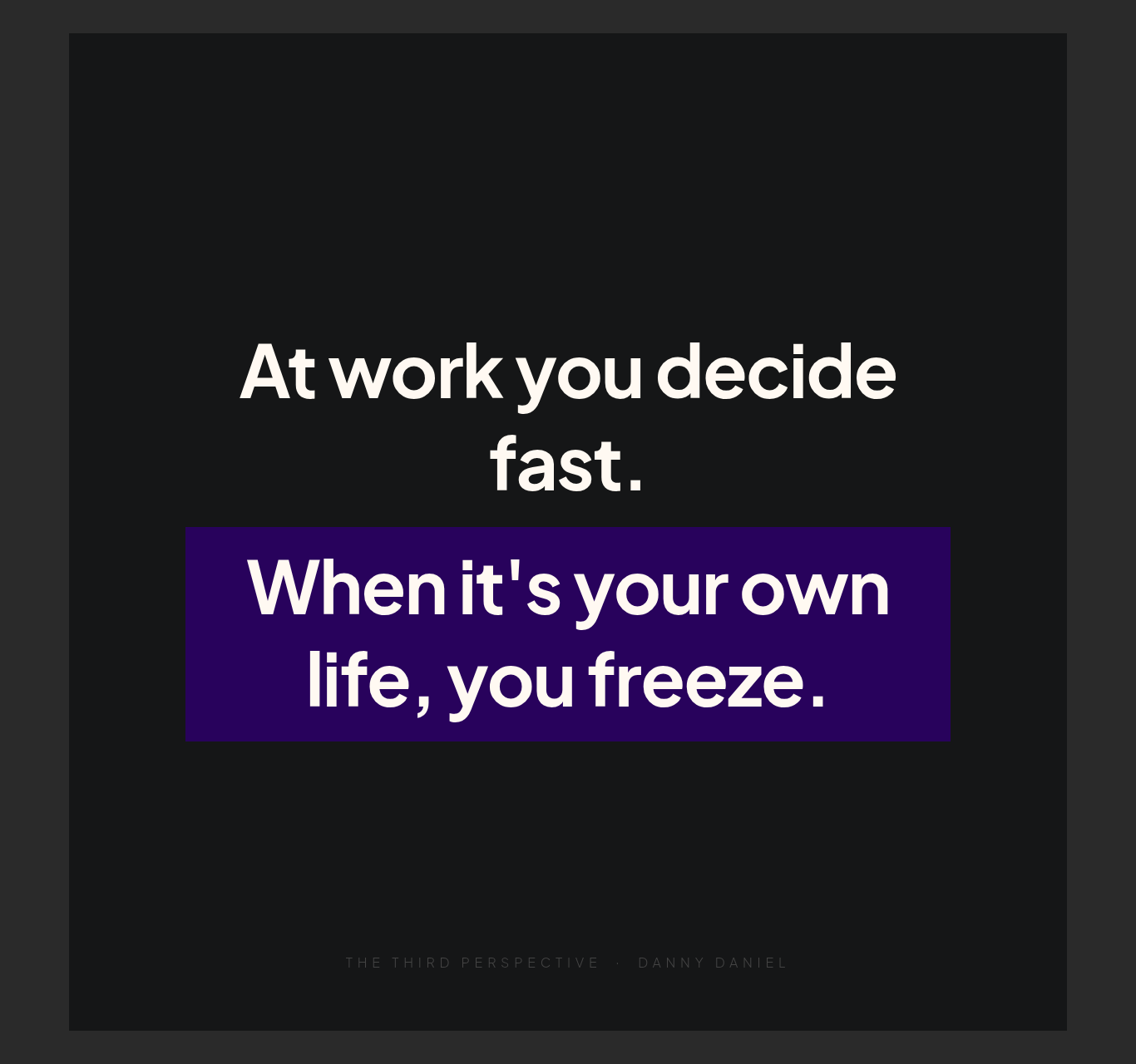
And because you can't tolerate that uncertainty you stay frozen analyzing, pros and cons, lists, more opinions, more research, more time, and the more you analyze the more confused you feel because that's called analysis paralysis and it disguises itself as prudence, you tell yourself you're evaluating carefully but you're not evaluating, you're avoiding, you're using analysis as a shield to avoid facing the fact that deciding means giving something up.
What resolves this is getting clear on what you actually want because that becomes your filter, and once you have that clarity half the options fall away on their own, you reduce to two or three maximum, you set a deadline and you look for a good enough option that's aligned with your values and allows you to move forward, because staying paralyzed is also a decision and almost always the most expensive one.
I'm going to tell you something you probably don't want to hear: changing jobs isn't going to resolve what you're feeling if what you're feeling doesn't come from the job.
How many times have you heard someone say that and six months into the new position they're in exactly the same place, same exhaustion, same frustration, same emptiness, different company, different logo, same story? What happened is that the problem wasn't the role but what that person carried with them everywhere they went, a misalignment of values they haven't examined, a lack of purpose that no job title resolves, a real difficulty setting limits, a self-worth that depends on the next achievement, personal conflicts that get projected onto every manager and every meeting, and if that doesn't get looked at it repeats.
Many of us use a job change as a quick painkiller, you're burned out, your life is out of balance and instead of looking at what's really going on you change the scenery and tell yourself "this time it'll be different," but professional burnout isn't just a problem with your company but a combination of working conditions and your own patterns, the perfectionism, the inability to say no, the self-demand you don't even recognize as a problem.
Before updating your resume ask yourself the real questions: what do you actually need, autonomy, recognition, limits, meaning, rest, and if you do decide to leave make it part of a real career transition and not just a new setting where you're going to repeat the same film with different actors.
There's a significant difference between being uncomfortable and being in the wrong place, and many people confuse the two because temporary discomfort is part of growing, but when that discomfort becomes structural, when there's no more learning, when the motivation is gone, when what you do has nothing to do with who you are or the life you want to build, that's something else entirely.
The signals are clear if you're willing to see them: you've been stuck for months or years, you wake up without energy, you feel like you're betraying yourself, or worse, you stay out of fear, out of inertia, because you've already invested so much, because what if it's worse somewhere else.
And the same applies to changing cities or countries, if where you are no longer allows you to grow, take care of your health, or build relationships that sustain you that's information, but moving has to respond to a conscious plan because if you leave just to escape a discomfort you'll take it with you, the landscape changes but nothing inside does.
Your personal timing matters as much as the emotional decision: do you have the resources to sustain the transition, do you have a support network, have you evaluated the reality of where you're going, because a change done well is a strategic move within your own story and one done poorly is a rupture that leaves you without a foundation.
Leaving a career has to be a designed transition and not an improvised escape, and the first thing you need to understand is that you're not starting from zero because you take everything you built with you, your communication, your leadership, your ability to manage, your contacts, your reputation, and all of that is capital but only if you know how to frame it as value and not as a life mistake.
You don't resign tomorrow and leave it to chance, what you do is plan a staged exit, you start testing the new direction in parallel with a project, training, or freelance work, something that lets you validate without destroying what you already have, and you map out a one to three year plan with concrete milestones, not pretty dreams but dates, numbers, real decisions.
How you leave matters as much as where you're going, give notice with time, close your processes well, communicate your change from a place of growth and not conflict because your reputation is one of the most valuable assets you take with you and if you burn it on the way out you pay that price in what comes next.
And on the emotional side there's something almost no one mentions: professional grief exists, even when you chose to leave, even when it's the right call, you're going to feel loss, you're going to doubt yourself, there may be days where you think you got everything wrong, but that's not a sign that you made the wrong decision but that you're in a real process of change, and anyone who tells you this is linear is not being honest with you.
There's a group of people who from the outside have everything figured out and on the inside are completely lost, the income is there, the title is there, the recognition is there, and yet something doesn't add up.
What happened is they built their life around achievement and not meaning, they worked years toward the goal, reached it and the brain adapted, what seemed like the big objective became normal within weeks and the emptiness appears because what they actually needed was never that, it was to belong, to truly rest, to feel that their value doesn't depend on what they produce.
And it comes from far back, from growing up in environments where affection was conditional on performance, where you learned that you're worth what you achieve, and that went so deep that today you're still operating from that logic without realizing it.
And there's something no one talks about: the loneliness, because the higher you get the more alone you are, not because there aren't people around since there are plenty, but they no longer speak to you the same way, they no longer tell you things as they are, your team respects you but won't challenge you, your family sees the results but not the price, your friends assume you're fine because things are going great for you, and you can't show vulnerability because the role you occupy doesn't allow it, that's the loneliness of leadership, it's not that you have no one but that you have no one to be completely honest with.
You've spent years disconnected from what really matters, from what you need, and success convinced you that could wait.
Professional clarity doesn't come from finding the next goal but from stopping to answer the questions of the previous chapter and starting to ask the ones that belong to the chapter you're actually in.
And it starts with knowing yourself for real, not the self-awareness of social media with pretty quotes but the kind where you sit with yourself and ask what do I actually value, what am I naturally good at and not what I trained myself to be good at, what interests me when no one is evaluating me.
Go back and look at the things you used to do and stopped, that hobby you dropped because it wasn't productive, that activity that made you feel alive that you gradually let go of because adult life convinced you it wasn't serious, wasn't profitable, wasn't enough, there's information there, a lot of it, because the things that made you feel good without anyone paying you for them tell you more about who you are than any vocational assessment.
When you build from who you are strategic decisions change in nature and stop being reactions to what the market demands or what your environment expects and start becoming conscious moves within a project that truly belongs to you, because burnout doesn't always come from working too much but often from working too much on something that isn't yours.
It's not whether you stay or go, it's not whether you start a business or stay corporate, it's not whether you move or stay where you are, the real decision is whether you're going to keep making decisions from fear, from inertia, from what others expect of you, or whether you're going to start deciding from clarity, from your values, from who you really are.
The best decisions aren't the ones you make with just your head or just your heart but the ones that integrate both, you analyze the data, the resources, the risks, the timelines, but you also listen to how your body feels about each option because your body processes things your mind hasn't rationalized yet.
The fear will be there always and the question isn't how to eliminate it but whether you're going to use it as information or let it decide for you, because transition isn't comfortable, it isn't linear, it has highs and lows, doubts, days where you think you got everything wrong, but it's the only path toward a life that's truly yours, and you don't need more information but direction, and direction starts when you stop improvising and start deciding with structure, with clarity and with purpose.
With purpose,
Danny Daniel.




.jpg)